Wednesday, May 11, 2022

Scaffolding the Interpersonal Mode


Have you noticed it's more difficult to encourage students to interact in the interpersonal mode in the world language classroom than it has been in the past?  If yes, you're not alone.  Common discussions circle around the fact that we were all isolated for so long so students now need to relearn how to converse in L1 before they can be expected to communicate in L2.  Others argue that students are always "plugged in" leaving less time for natural, face-to-face communication to occur.  Either way world language teachers are in a conundrum:  how do we encourage interpersonal communication in class?

One group of language educators started implementing what they refer to as Conversation Stations into their lessons to help with this situation.  What are they and how are they used in class?  Conversation Stations are a set of 10 different mini conversations based upon the same topic.  For example, the theme of School Life, Clothing, and Hobbies have been used with success following this model.  

The first step in creating the mini conversations after choosing the subject matter is to peruse authentic materials in the target language and highlight vocabulary that native speakers use in context.  What questions are common for this theme?  Keep these words and expressions in mind and then its time to let your own creativity come to life.  Now, it's time to develop 6 complete mini-conversations.  Anywhere from 3 to 4 exchanges is appropriate for learners.  Once the six complete conversations have been created, it's time to make 4 mini conversations with only one part of the conversation provided.  The portion provided could be either a question which would require a response from students or it could be the response which would then mean the students would have to think of a logical question eliciting the answer provided.  

The conversations are ready, now what?  In class students either choose a partner or are assigned to work with someone.  They move through the classroom to "stations" where only one conversation is seen.  Students are encouraged to work together to find the meaning of the interaction between the two roles first.  Then each student chooses a role and role plays by reading his/her part.  Students switch and repeat.  The repetition is important as it provides an opportunity for students to really grasp comprehension in context.  The learners work through stations 1-6 with the full mini conversations.  This provides them with a lot of input so that when they start with station 7 and only see half of the exchange, they can pull from what they've seen in stations 1-6 to think critically and solve the problem of how to respond in context to the statement or question provided.  Stations 8,9, and 10 further support problem solving and critical thinking.  After moving through all of the stations students are now at a point where they feel confident in creating their own conversations and the expectation of having them work in the interpersonal mode is more achievable.  

Here are links to several sets of conversations that can be used for various themes in Spanish and in French.  Simply click on the links provided.  

Spanish Conversation Stations Bundle

French Conversation Stations Bundle

How have you responded to the dilemma of encouraging student communication in the target language in your classroom?  


Monday, February 28, 2022

March Music Madness

 It's March!! That means it's time for the annual March Música Madness tournament that SpanishPlans created many moons ago. Check out his Tournament Page and all the amazing resources. See why so many teachers call the SpanishPlans bracket the best bracket. Your students will love these current songs.


If you haven't done MMM before, it's easy! Use the Google Slides with artist information, embedded videos, and a national poll.  Listen and class and have your students vote for their favorite! 

Shared Google Drive with many documents to use
Bracket: Final 16 songs
Google Slides  with song and artist bio, embedded video, and voting links

Bulletin Board Bracket Labels – Print and create a bulletin board bracket of the songs


Facebook Group – If you create any of your own documents, you can share them with other teacbhers

Friday, July 30, 2021

Top Wishlisted Items for Spanish Teachers

With TeachersPayTeachers site-wide back to school sale happening on Tuesday, August 3 through August 4, now is a perfect time to start adding these items to your carts to earn you big savings. These are the most wishlisted items from each teacher's store. 


Check it out below:

You are invited to the Inlinkz link party!

Click here to enter

Monday, August 3, 2020

Diversity in the WL Classroom


Diversity is a topic that a lot of World Language teachers are thinking about recently.  Discussions in many social media groups have teachers reflecting about the environment and activities that are offered in their classrooms.  Questions such as, "do students see themselves in this curriculum?" are requiring many to revamp and make positive change in their lessons for the 2020-2021 school year.  The good news is that there are already resources available for others to use immediately.  Keep reading to find some ideas below.

One easy way to incorporate a more diverse structure to a curriculum is to make sure that more than one country where the target language is spoken is represented.  This can be done by simply promoting target language countries on bulletin boards or by having students do independent research on a place that interests them.  Here are a few resources that will help:


Another way to involve diversity is to add activities which include culture into lessons.  Below are some great activities that can help:


How about introducing students to famous target language speakers?  This is an easy way to have students find connections and comparisons to their own individual circumstances.  The following resources will help:


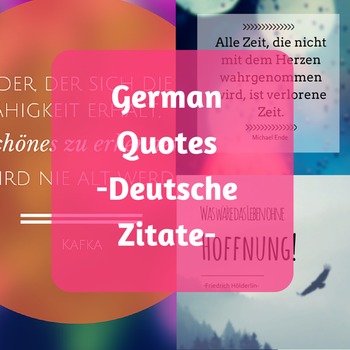
One final idea would be to incorporate famous quotes and citations that speakers of the target language have said.  


Good luck in the upcoming school year as diversity becomes more prominent in the curriculum.  

Sunday, September 16, 2018

Higher Order Thinking Skills in the WL Classroom


Higher Order Thinking Skills (HOTS) are activities in which learning requires augmented levels of cognitive processing.  On a Bloom's Taxonomy scale these activities would fall under the category of analysis, evaluation, or synthesis.  Chances are that if you're still in the classroom you've heard this terminology a lot.  How can we add these activities in the language classroom?
One way to incorporate HOTS is by providing students with more activities that require problem solving.  Think of conversations where students are only given half of the information and then must complete the missing parts logically to finish it.  This activity could be completed by providing students with blank spaces where the other half of the conversation would be found.  They could work individually to brainstorm possible responses and then after a specified amount of time students could partner up with each other.  Next, they would share their thoughts from their brainstorming session.  Then, students would decide who is Partner A and who is Partner B.  The teacher would provide Partner A with one half of the completed conversation and Partner B with the other half.  Students would take turns reading their role and filling in the page with what they hear from their partner.  Finally, students could create a Venn Diagram comparing and contrasting their initial ideas of the logical completion of the conversation with the full conversation they worked on with their partner.  As a follow up activity students could develop their own conversation on the same concepts for a class work or homework assignment.

Check out these ready to go activities for the French classroom:

L'École

 
Les Passe-Temps
La Jeunesse
Greetings and Salutations

How do you incorporate HOTS activities into your WL classroom?  We'd love to hear some other ideas!  Leave a comment below.


Tuesday, August 21, 2018

Timed Writing

A great way to show student progress in the language is to use timed writings. A timed writing is when you give students a specific amount of time, for example, 5 minutes, to write as much as they can in the target language. The idea is that the more language a student has internalized the more they will be able to write. This is a technique that is used by many teachers who teach with CI strategies such as Storytelling, Story-asking, TPRS, or other CI methods.

First, find a prompt. Some teachers will use timed writing at the end of a particular lesson/unit to measure what the students acquired from a particular story. These end up being re-tells of the story.

What I like to do is to take a picture sequence that I haven't told as a story and have my students write about that. That lets me see what structures they have acquired and can APPLY without just regurgating the same language that I have just provided.

If you are looking to show growth, you essentially need a pre-test. That means you should have your students do a timed-writing early on in the year, during the first few weeks of school. Expect this number to be low. After several weeks of comprehensible language, your students will be able to produce a little more. If you have them do the same prompt every month, you will see students get better every month.


https://www.teacherspayteachers.com/Product/World-Language-SLO-Timed-Writing-3931813

This download includes 2 picture prompts as well as a spreadsheet and google gradebook for tracking the data. The google gradebook is also capable of automatically producing an individual grade report that you can use to communicate student progress with parents.

Let us know what questions you have about Timed Writings and we will post a Q+A, FAQ post nex time!

Thursday, January 25, 2018

6 Ways to Use I have...who has? in the WL Classroom


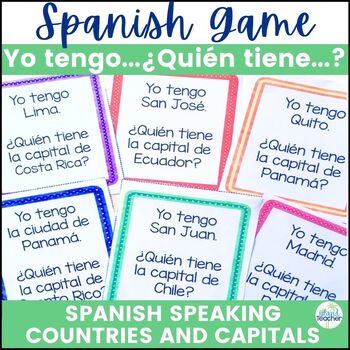
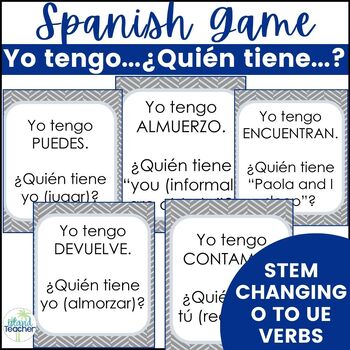
I have...who has is a great game to use in World Language classes to help students hone in on their speaking, listening, and pronunciation skills.  Have you ever wondered what else can be done with this game?  Here is a list of 6 different ways you can get more out of this simple game with your students.

1.  Turn It Into a Class Competition
Distribute the cards to students making sure that all cards have been passed out.  Set a timer and record the time it takes for the class to move through every card.  Write this time on the board.  Collect and redistribute the cards.  Play the game again and see if the class can finish this round faster than the previous time on the board.  This can also be done as a competition between different classes if you teach the same course multiple times throughout the school day.  

2.  Play In Small Groups
Instead of playing I have...who has as a whole class game divide your students into two or more groups.  Provide each group with a set of cards.  Students will have more than one card if you choose to play this way.  On the plus side, they will receive more practice.  This can also be a great way for teams to compete.  See which group can finish first!

3.  Extra Individual Practice
Have individual students grab a set of cards and place them in order from start to finish to practice the concept individually.  The student can choose to place the cards in rows in order or play it on the ground in a wide open space to create a giant circle from start to finish.

4.  Presentational Practice
Combine two to three sets of the same game and redistribute the cards to students.  Have them use the answer part to create complete sentences with the information on the cards.  They can then turn these statements in to receive a homework or classwork grade.

5.  Put The Cards In Order
Use a dry erase marker and write a number on the top corner of the card.  Be sure to use random numbers and to not write them in order.  Then, place the cards in order and write down on a post-it note or other piece of paper the correct order of the cards from start to finish.  Keep this piece of paper with you.  Distribute one set of cards to small groups of students and have them work together to place the cards in order and to write down the numbers from the cards.  The students should then pick a representative from their group to bring their list of numbers to you to check.  The first group with the correct order wins!

6.  Review for Upper Levels
Play the same sets you play with lower levels with your upper level students, but require the students to respond in complete sentences as opposed to just giving the answers.  Advanced students will not only have to produce the correct answer and a logical sentence, but they will also have to listen closely to distinguish the portion that would appear at the top of another card.

These are just a few tips for getting the most out of your I have...who has? sets for class.  See below for some already created sets that you can use right away with your students.  How have you incorporated this unique game in your own classes? 


Monday, August 28, 2017

Teaching and Masking Grammar While Staying in the Target Language


As World Language teachers, we run into the big question: Should I focus my attention on communication and practicality or should I focus on grammar.  Often, I hear teachers ask (myself being one of them) “How often do we visit a country where the target language is spoken and get asked to identify the parts of speech?”  Probably not too often.  But does this mean we should ignore grammar altogether?  While more recently, many of us as World Language teachers are more communication and practicality focused (again, myself included), we must take into consideration

Monday, August 7, 2017

5 Tips for Using Bell-Ringers in the WL Classroom


The summer is winding down and several teachers are preparing to return to school in the United States in the next few days or weeks.  This post includes advice for getting the most out of the time you have with your students by implementing Bell-Ringers once class begins.

Research has shown over the years that Bell-Ringers are beneficial in many ways.  Namely, they help to set the tone for the students that it is time to focus and learn.  They also help students engage their prior knowledge from a previous class period.  And finally, they allow the teacher to complete daily administrative tasks that are required such as taking attendance and passing out papers.

Here are 5 tips to ponder for the upcoming school year:

1.  Have a Bell-Ringer already displayed on the white board or written on the board as students enter.  Be sure to always include an example response so students can see what is expected.  This will also eliminate students asking, "What are we supposed to do?"

2.  Be sure the Bell-Ringer takes 5 minutes or less to complete.  If the task is too complicated, students will be less likely to dive-in and respond to it.  Plus, it is important to devote other time to learning new concepts.

3.  Provide students with an answer sheet for the entire week or require them to keep their answers on one sheet of paper.  This will cut down on the amount of paper shuffling that you do during the year.  It will also encourage the students to be responsible for keeping up with their work.

4.  Take up the answer sheets on Friday or the last day that your class meets for the week.  Quickly look that the students attempted the answers and that they corrected any errors that they might have made.  This will also give you an extra opportunity to see who is struggling and needs more of your attention.  Add this assignment as a class work grade for class participation.

5.  Spice things up by playing your favorite target language music as students complete the Bell-Ringer.  Mix up the genre each day and be sure to write the artist's name on the board so students can listen to the music on their own time outside of class.  Have a rowdy class?  Play music with a slower rhythm to calm them down.  Have a class who is still asleep or drowsy?  Do the opposite and play tunes with some pep.

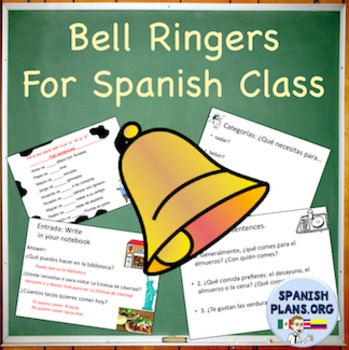
Here are some ready made Bell-Ringers to help save you some time and planning.


How do you use Bell-Ringers in your classes?

Tuesday, April 25, 2017

Engaging Projects for the WL Classroom!

Spring has sprung and students and teachers alike are wishing the days away.  Spice up your world language classroom with the project ideas listed below and save yourself some time and energy! 


French Adjectives Poster Project
This project allows your French students to practice using regular and BANGS adjectives to recreate 18 different sentence fragments in French. This assignment is perfect for review to begin the semester, to practice, or to prepare for the final exam.


Spanish Selfie Project Una Rutina Diaria 
This is an engaging project to do with beginning to intermediate Spanish students. The final product requires students to create selfies of twelve different activities they do in a single day and create a hashtag for each one. Students will need prior knowledge of reflexive verbs, activities, and time.


 Spanish Food Comida Project
Project allows students the choice of making or performing one of the following: skit, interview, comic strip, Children's book, storyboard, or powerpoint. Great way to differentiate and use multiple intelligences!


Create a New Restaurant A French Project
Students will use the food vocabulary that they have learned and create a new fast food restaurant. Students will write a press release in French announcing their new theme restaurant, and create the menu.


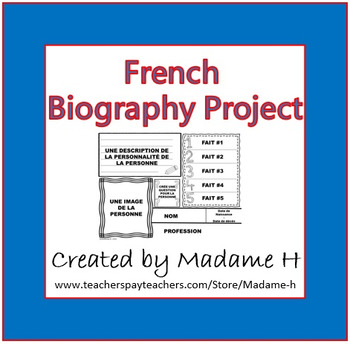
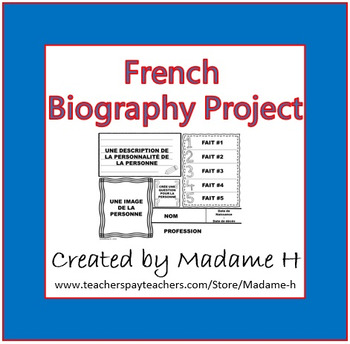
 French Biography Project
This is an activity for French students in which they research a French speaking person and create an infographic about his/her life. There are two options of the project to allow for differentiation. Option 1 is appropriate for beginners. Option 2 is appropriate for intermediate learners. Students will practice giving descriptions, reporting facts, and asking questions.


Spanish Fairy Tale Writing Project 
This 2-3 week Spanish lesson plan is a fun fairy tale project which combines grammar, advanced vocabulary, a speaking component, and advanced verb tenses. This can be used any time of year, but it works especially well as an end of year, final Spanish project. 


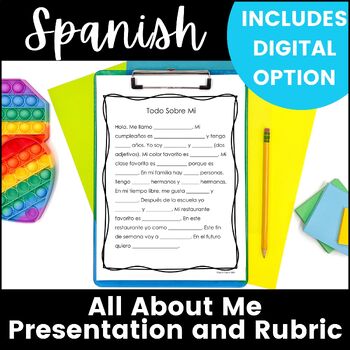
Todo Sobre Mi
Use this Todo Sobre Mí guided monologue template to give your Spanish students a format to give an oral presentation about themselves.


 El Alfabeto y el Armadillo
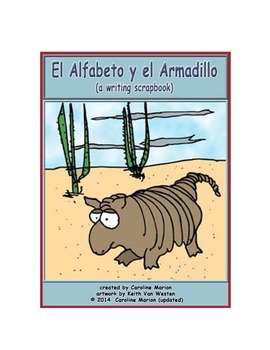
Need an end of year project? Students complete this book by “scrapbooking” with their own choice of personal photos, colorful magazine pictures, computer images and some of their own drawings. In addition, students will enjoy writing about what interests them. It’s a keeper!


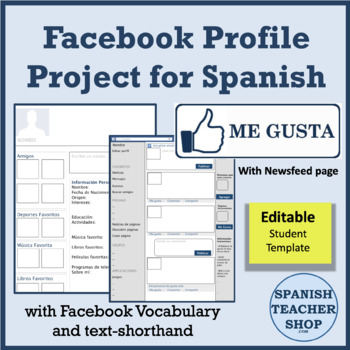
Facebook Profile and Newsfeed
Students create their own 'Facebook' profile page. Students can create a profile page for themselves or for a famous person. This includes biographical information such as their favorite sports, music, books, movies, and tv shows.


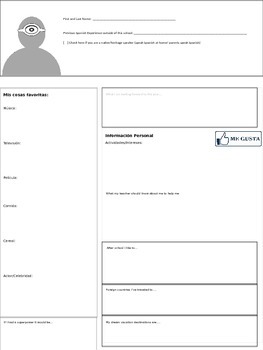
 French Selfie Project Les Loisirs
This is an engaging project to do with beginning French students to reinforce vocabulary for leisure time activities and preferences. The final product requires students to create selfies in which they participate in activities that they enjoy as well as name where they are.

Sunday, November 13, 2016

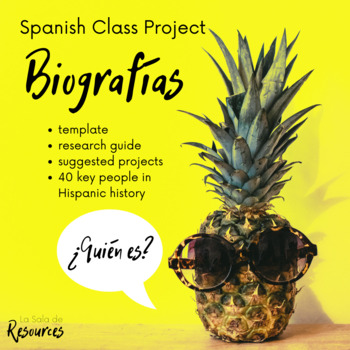
Researching Famous Hispanics


Looking to add a bit of culture to your class with famous Latinos and Hispanics from the Spanish Speaking world? Check out the projects and resources below.


Notable Hispanic Americans Infographic Project: Research a Hispanic America with this template that includes space for name, title or profession, photo, date of birth and death, Hispanic country of origin, and a list of accomplishments, awards, etc. 
Includes a list of over 50 Hispanic Americans to choose from.


Review Spanish adjectives, professions, age, tener, ser, estar, etc., while learning interesting facts about famous people and famous Hispanics. This game can be used for advanced beginner, intermediate, or advanced students. Includes descriptions and pictures of 30 people in total (17 Americans and 13 Hispanics).

Famous Spaniard Project: Research a famous Spanish person for an essay and oral presentation. Students include basic demographics, historical/current context of the famous person's profession in Spain, important events in their life, their childhood, how they became famous, etc.


Check out the Spanish 1 version about a famous Latino.


Hispanic Leader Task Cards and Game:  40 task cards contain clues about different Latino and Hispanic Leaders. These leaders may be explorers, politicians, entertainers, sports heroes, etc. A few are even characters in TV shows or books that have influenced us. These leaders may have been born in the United States, but have Hispanic parents, or they may have been born in Latin America or Spain


Thursday, August 18, 2016

First Week Lessons and Activities in WL Class


SpanishPlans tells about how to hit the road running by using the Target Language on the very first day. His lesson lets students know that the teacher's job is to make class comprehensible for the students and that they students can be successful in class without needing English. Read more in... Spanish From Day 1

SpanishMama wants students to understand 3 things on the first day: 1)The target language is spoken as much as possible. 2) The teacher cares about you and you are in a safe environment. 3) The teacher is there to make the class comprehensible. To accomplish this, she offers 10 games and icebreakers that take out the anxiety and make students feel comfortable. Read more in... 10 IceBreakers and Games for the Language Classroom.  She also gives a great outline of her first two weeks of lessons here.


La Profesora Frida will tell you that establishing a good rapport with your students the first week of school will pay huge dividends the rest of the year. She gives some great ideas on how to get to know your students and creating a safe environment for language learners. Read more in.... The First Week of Spanish Class, Part 1. 


Ellen of MinutebyMinuteSpanish explains her first day's lesson using a Daily Tech Guide which provides visual support for her students to make the language comprehensible. You can read more about it in.... Spanish 1 Day 1 Lesson Script for 90% TL. 

Carolina of Fun for Spanish Teachers makes a book about herself to share with students. You can read about it in... An Idea for First Day of School. But she has also used a Prezi, played games, and used exit tickets, which you can read more about in...My First Day Back to School.

Allison of Mis Clases Locas, shares a detailed look into her lesson plans, which include music, persona especial, the Super Siete, and more! Read more in... 1st Week of Spanish Class using CI. She even has a "Can-Do statement" for each day: in this post about the first week of Spanish Class.

Profe Oxana shows us how she uses a song to practice names of students. (Nombre) se comió el pastel que le hizo su mamá. (Quién yo?) Sí, usted. (Yo no he sido). Quién fue? (nombre). Watch it in action here.

Mundo de Pepita uses pictures of words that are already part of our language to show students that they already know some Spanish words. 

M&M Bilingual has students fill out a Back to School book where students share information about themselves and also gets them started right away using her word wall. 

Sra. Cruz focuses on relationship building, with the Patch Adams philosophy,  and offers some fun activities and games in the TL including The Name Game, Would You Rather, Ball Activity, Two truths, one lie, and more in the First Days of Spanish Class post.


Free Resources:

-Have students fill out a profile that looks like a Facebook Page lets students tell you about their interests. Great way to get to know your students.

-Or have them fill in this document with information about themselves.

-Have students create a banner with their goals for the year.

-Students will write about class expectations in Spanish in this mini book.


Check back for more free resources for the first day to be added!